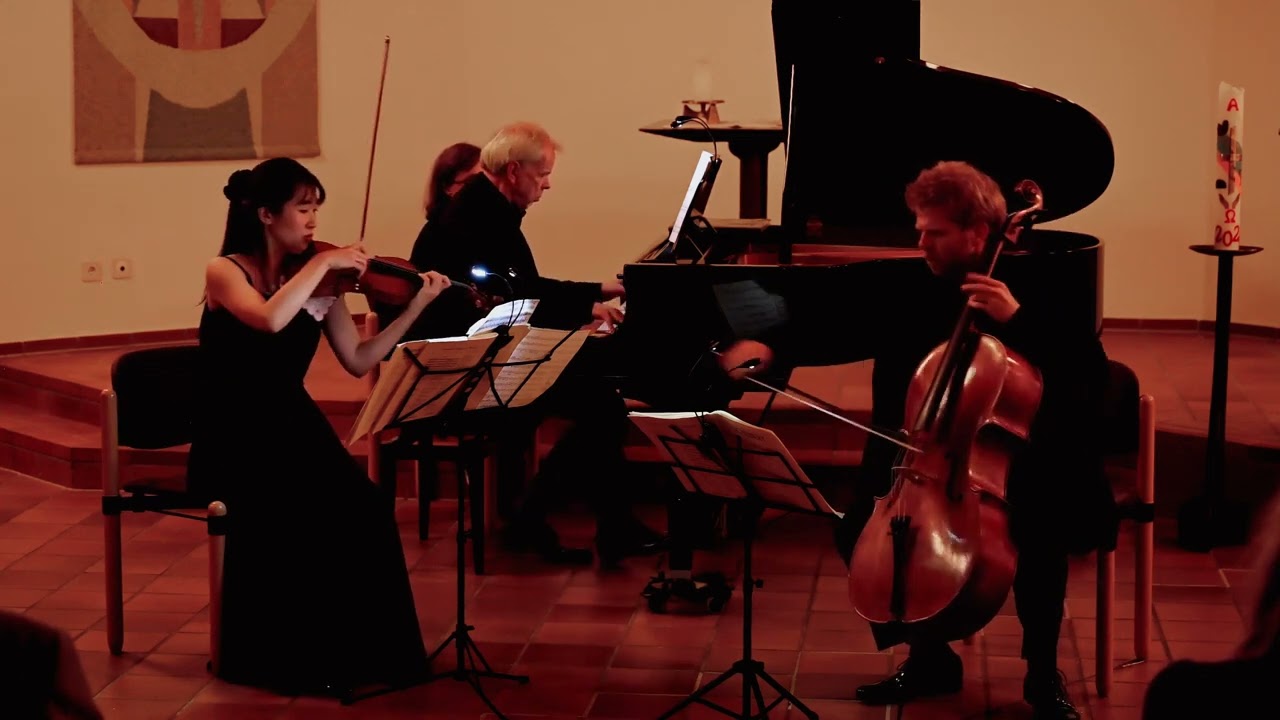
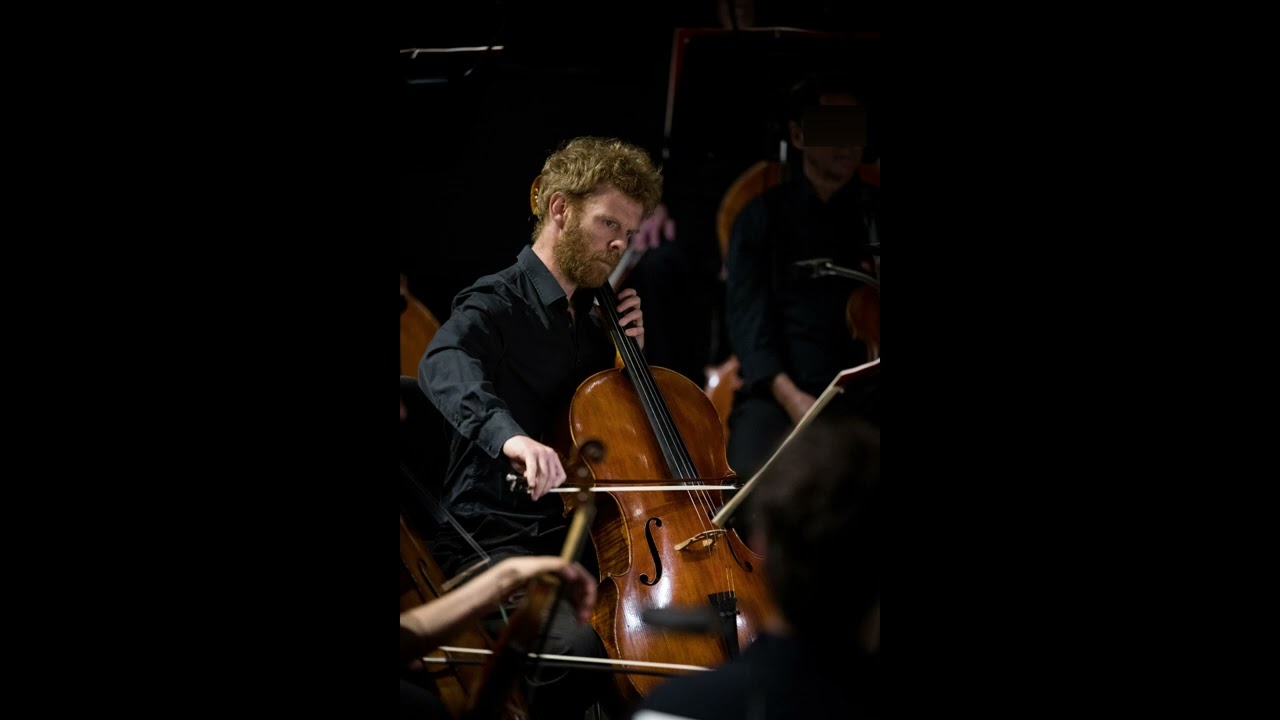
Born in Grasse, France, Yan Vaigot received his first cello lessons at the age of eight from Jean Luc Vidal and gave his first concert as a soloist at the age of twelve.
At the Folkwang University of the Arts in Essen, Germany, he studied cello with Professor Christoph Richter and Professor Young Chang Cho and chamber music with Professors Andreas Reiner and Dirk Mommertz.
He also received important musical impulses from musicians such as Wolfgang Herzer, Frans Helmerson, Jérôme Pernoo, Rivka Golani, Gary Hoffman and Ko Iwasaki.
As a soloist, recitalist and chamber musician, Yan Vaigot has been honored with numerous prizes and scholarships and taken part in international competitions such as the Antonio Janigro Senior Competition, the Internationaler Johannes Brahms Wettbewerb and the Internationaler Wettbewerb der ARD.He has performed with artists such as Nils Mönkemeyer, Marc Bouchkov, Ana Mirabela Dina, Rainer Moog, Hideko Kobayashi, Michael Hauber and Catherine Vickers in a wide variety of formations and recordings of his concerts can be heard on various radio stations in France and Germany, and he was also a member of the clarinet trio Lafroyg until 2018.
Yan Vaigot has performed throughout Europe, in the USA, in the Balkans and in Central and East Asia.
In addition to his busy concert schedule, he also enjoys teaching very much.
He was a lecturer at the Ida Bieler String Academy in Cologne and has given master classes in Albania, China, Taiwan, Germany and France.
Yan Vaigot is Principal Cellist of the Hagen Philharmonic Orchestra and a member of the Schnitzler Quartet.
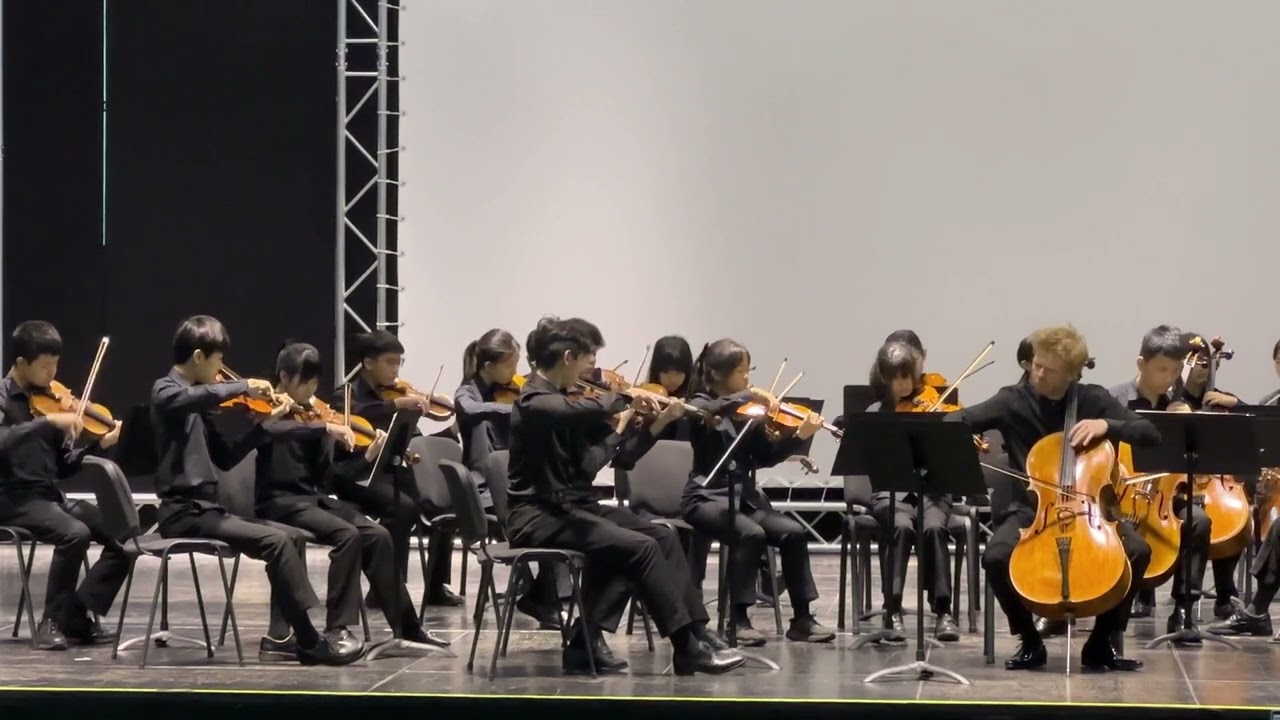
The first highlight was Haydn’s Concerto for Violoncello Hob. VII:2 in D major, whose lively final movement is particularly well-known. Yan Vaigot took on the solo part. The string instruments were joined by two horns and two oboes. The cellist is a familiar face at the Wallgraben concerts, having already performed as a member of the Schnitzler Quartet. It was impressive to hear the lightness he conveyed when he pressed down the strings at the lower end of the fingerboard with great force in order to do justice to the immense range of the piece.He was convincing in all registers with a beautiful tone, subtle intimacy and great virtuosity. An enchanting adagio with a touching cello tone, lustrous oboes and dense playing overall was a beautiful haven of peace before the rondo theme with its diverse couplets returned with great energy and vibrancy. This was followed by the first encore, as the audience did not want to let Yan Vaigot go so easily.
This magnificent work provided the Hagen Orchestra’s first cellist with a perfect stage for his solo performance and once again gave the ensemble the opportunity to show what furious and fascinating musical journeys it is capable of. Highly focussed, Yan Vaigot dared to tackle one of the most demanding compositions and proved to be a brilliant interpreter – he was not the only one who was out of breath during the performance! From the first movement on succeeds the 38-year-old French so intensely and powerfully, almost furiously, as if he wanted to tell of the composer’s bitter experiences under the Stalinist regime of persecution and oppression. Vaigot’s playing makes the enormous power of this work almost physically palpable. It unfolds a gripping intensity that the audience cannot escape. The strings intonate the dissonance of the second movement in deep mourning, the lament breaks out of the cello and is echoed in the orchestra until the celesta (Taepyeong Kwak) heightens the weeping and makes it unbearably beautiful; in the cadenza, Vaigot’s great virtuosity becomes audible between rapid tempi and melodic lines before he plays seamlessly into the last movement. The encore is as likeable as the musician himself: Vaigot uses Tchaikovsky’s “Valse Sentimentale” Op.51/6 for a performance with his four colleagues – to the delight of the audience, five cellists among themselves.